Roof Truss Cost by Region: UK, AU, CA and SA
Roof truss cost by region compared: typical price ranges for the UK, Australia, Canada and South Africa, what drives the variation, and how to read a quote.
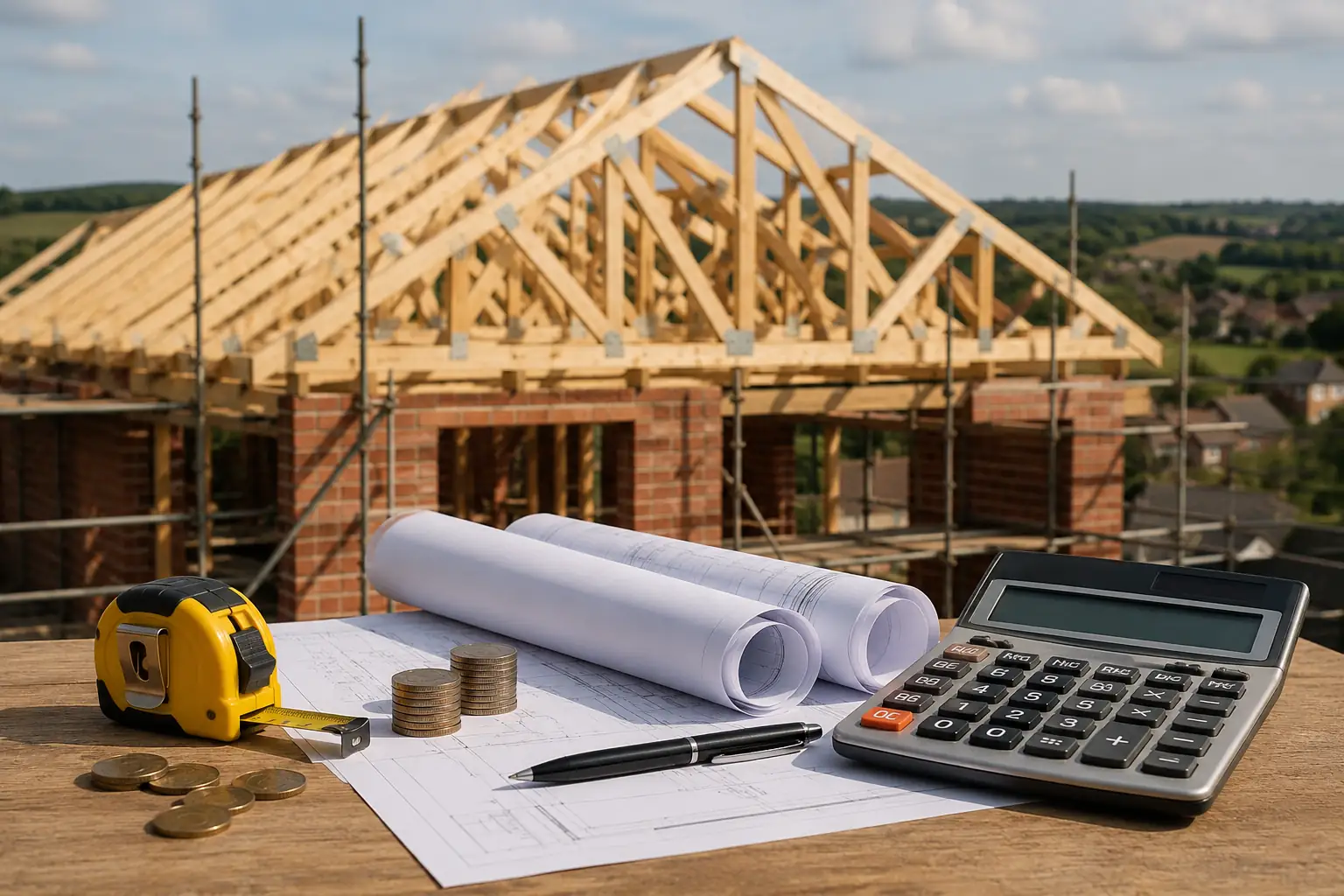
Roof truss cost by region varies more than most people expect, and the reason is rarely the truss itself. Design loads, quoting conventions and what a supplier includes in a price differ enough between the UK, Australia, Canada and South Africa that two quotes for the same building can look nothing alike. To build a package price on your own span and truss count, use the roof truss calculator and then the roof truss cost calculator rather than scaling any figure from this page.
Everything below is directional. These are ranges reported by suppliers and trade press, gathered as of August 2026, intended to help you judge whether a quote is in the right neighbourhood. They are not quotes and they will drift.
What is the same everywhere
Four things hold regardless of market:
Price rises faster than span. Doubling the span more than doubles the price, because the longer truss also needs bigger chords and more web members.
Complexity multiplies. Against a plain common truss, a mono costs less, a hip or scissor costs more, and an attic truss can cost well over half again.
Load matters as much as geometry. The same truss designed for heavy snow or a cyclonic wind rating costs materially more, because the extra load pushes chord sizes and plate sizes up throughout.
Volume cuts unit price sharply. Design time and jig setup are fixed per profile. Fifty identical trusses cost far less each than five. Keeping the number of distinct profiles low is one of the most effective ways to cut a package price.
Regional comparison
| Region | Quoting convention | What usually drives the variation | Typically excluded from the headline price |
|---|---|---|---|
| United Kingdom | Per truss, spans in metres | Steeper domestic pitches, wind rather than snow, Part L insulation detailing | VAT on trade orders, delivery below a threshold |
| Australia | Per truss, spans in metres | Wind classification (N1 to N6, C1 to C4), termite protection | Tie-down hardware, cyclonic upgrades |
| Canada | Per truss, imperial | Ground snow load, unheated-building penalty, raised heels | Delivery, crane, gable-end frames |
| South Africa | Often per square metre of roof area | Timber against light-gauge steel share, coastal wind | Certification paperwork, fixing where quoted supply-only |
| United States | Per truss, imperial | Snow load by county, lumber market volatility | Delivery, crane, gable-end frames |
United Kingdom
Prices are quoted per truss and spans are given in metres. A standard domestic trussed rafter for an ordinary house span sits in the lower part of the market; room-in-roof trusses cost several times that.
Terminology differs and it matters when comparing. The UK calls the standard Fink truss a “trussed rafter” and the whole roof structure a “trussed rafter roof”. An attic truss is a “room-in-roof truss”. A mono truss is a “mono-pitch truss”. Searching with the wrong term returns the wrong suppliers, and the UK trade body for the sector is the Trussed Rafter Association (opens in a new tab), which is a useful starting point for finding members.
What moves UK prices. Domestic pitches run steeper than in North America, which means more material per truss for the same footprint. Wind load rather than snow load usually governs, particularly in Scotland and on exposed coasts. Building Regulations Part L has pushed raised-heel detailing into the mainstream, adding cost but solving the eave insulation problem properly.
Check whether VAT is included. Trade orders normally quote excluding it and retail orders including it, and that difference alone explains a lot of apparent price gaps.
Australia
Prices are quoted per truss with spans in metres, and one variable dominates everything else.
Wind classification is the biggest single factor in Australian truss pricing. Sites are classified N1 to N6 for non-cyclonic regions and C1 to C4 for cyclonic ones. A C-class truss needs heavier plates, substantially more tie-down hardware and often larger chords than the identical geometry at N2. This is why a Queensland coastal quote and a Melbourne suburban quote for the same house look like different products. They are different products.
Termite protection is a routine requirement across much of the country, which is part of why light-gauge steel holds a larger residential share here than in the UK or US.
Roof pitch is quoted in degrees rather than as a ratio, with shallower pitches common in modern housing. If you are working from a North American plan, convert with the angle and pitch calculator before requesting a quote.
Canada
Pricing tracks the US closely. Same lumber market, same per-truss quoting convention, similar supplier structure.
Snow load is the differentiator, and it is significant. Ground snow loads across much of Canada are high, and mountain and northern regions considerably higher. A Calgary truss and a Vancouver truss of identical geometry are genuinely different designs.
The unheated building penalty catches a lot of projects out. Both ASCE 7 and the National Building Code (opens in a new tab) of Canada apply a thermal factor that increases snow load on unheated structures. Detached garages, barns and workshops all attract it, and people are routinely surprised that the garage truss costs more than the house truss.
Raised heels are close to standard in new Canadian residential construction, driven by the energy code. If a quote does not mention heel height, ask, because it is a real cost difference between otherwise identical quotes.
South Africa
Trusses are frequently priced per square metre of roof area rather than per truss, which is a genuinely different convention and makes direct comparison with other markets awkward. Supply-only pricing runs at a substantial discount to supplied-and-fixed.
The market splits between treated SA pine and light-gauge steel, with steel holding a meaningful share driven by termite pressure and timber supply variability.
Trusses should come with certification confirming the design and erection comply with the applicable national standard. Ask for it. It matters for insurance and for the occupancy certificate, and its absence is a genuine problem rather than paperwork pedantry.
Wind loading governs in coastal regions. The interior is comparatively benign for both wind and snow.
The costs people leave out of the budget
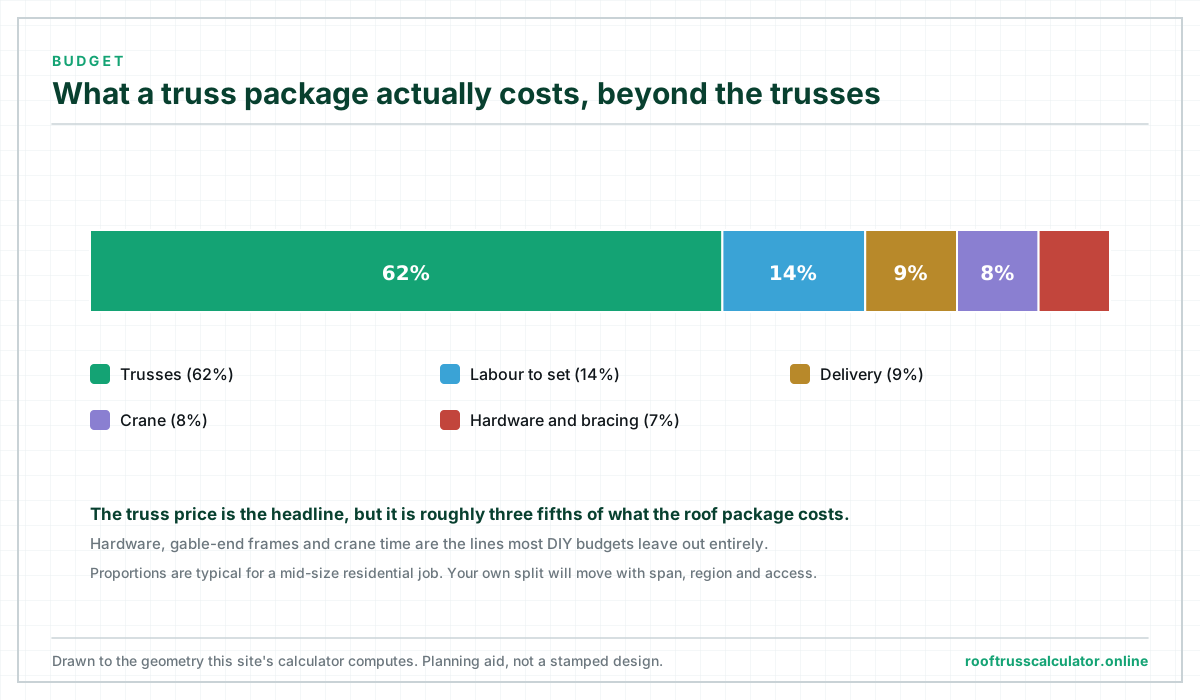
The truss price is typically only part of what the roof structure costs.
Delivery is usually a separate charge that scales with distance, and an oversized load may need a permit.
Crane or telehandler hire becomes close to mandatory once trusses pass roughly 30 ft of span or 150 lb each. Check the weight before assuming you can hand-set, which the weight calculator will tell you.
Hardware. Hurricane ties or equivalent tie-down, girder hangers, and bracing lumber. Small per truss, real across a roof, and almost always left off DIY budgets.
Gable-end frames. These cost more than the common trusses beside them, and they are frequently a separate line item or missing from a quote entirely.
How to read any quote, in any market
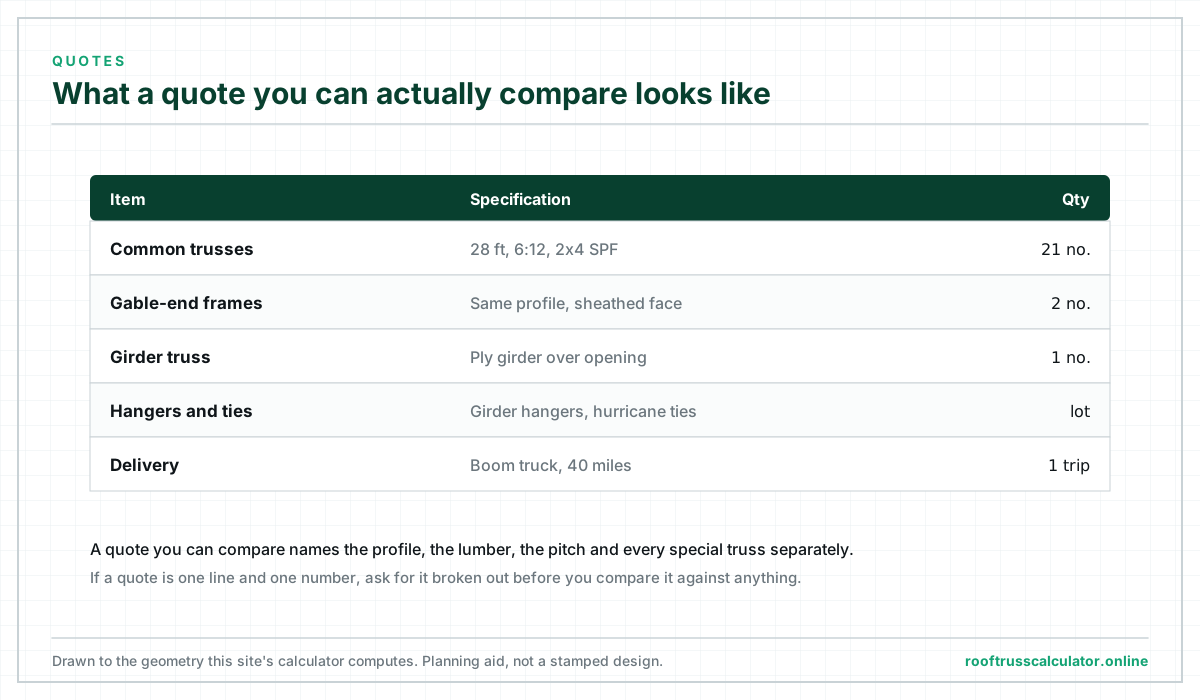
Four questions explain most of the spread between quotes for the same building:
- What loads was it designed for? Ground snow, wind classification, and bottom chord live load. This is the biggest hidden variable and the one most worth pinning down.
- What heel height? A standard heel and a raised heel are different products at different prices.
- Is delivery included, and is a crane assumed to be your problem?
- Are the gable-end frames priced in?
Get every quote on the same basis before comparing. Two quotes 30% apart usually turn out to be for two different roofs.
For how material choice feeds into these numbers, see roof truss materials compared. For whether installation labour is a cost you can take on yourself, see DIY versus professional roof truss installation.
Converting between markets
Working from plans drawn for another country is common and slightly hazardous.
Pitch. The UK and Australia quote degrees; North America quotes rise over 12. Roughly, 22.5° is close to 5:12, 30° close to 7:12, and 45° is exactly 12:12.
Spacing. North America uses 24 in centres. The UK and Australia typically use 600 mm, which is close but not identical.
Span. The convention is the same everywhere: measured out to out of the bearing points. Only the units change.
The calculator has a metric toggle that converts every input and output, so you can work in whichever system your drawings use without converting by hand.
Frequently asked questions
Why is my truss quote so much higher than an online price guide?
Almost always design loads. Published guides tend to assume benign snow and wind. If you are in a high snow region, a cyclonic wind zone, or specifying tile roofing, the truss carries substantially more and costs accordingly. Heel height and included extras explain most of the rest.
Are roof trusses cheaper than rafters?
In total installed cost, usually yes. Truss material often runs above the equivalent rafter lumber, but a truss roof goes up in a fraction of the time, and that labour difference tends to dominate the comparison. Local labour rates decide by how much.
When were these figures last checked?
August 2026. Truss pricing moves with lumber and steel markets, and both have been volatile since 2020. Many plants now hold a quote for weeks rather than months, so treat any published range as directional and get a current quote for anything you are budgeting seriously.
Does buying more trusses reduce the price per truss?
Significantly. Design time and jig setup are fixed per profile, so the cost is spread across the run. Reducing the number of different truss profiles in a job usually saves more than negotiating on the unit price.
Should I get quotes from more than one supplier?
Yes, and give each the same specification: span, pitch, spacing, design loads, heel height and overhang. Suppliers quote to what you tell them, so vague briefs produce quotes that cannot be compared.
Next step
Build a package number for your own building rather than working from a range. Enter your span, building length and spacing in the cost calculator, add your own supplier rate once you have one, and you have a figure you can put in a budget and check quotes against.